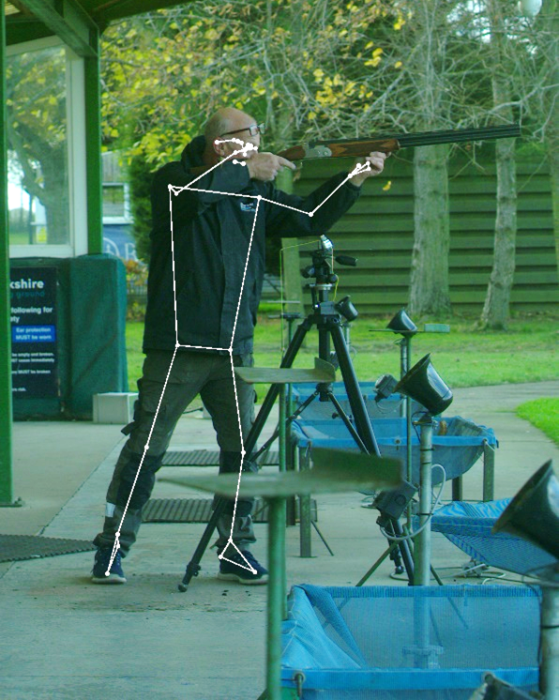
When you open your Christmas present this year it might not be obvious that you are helping a revolution in sports science.  Some of the most popular presents are likely to be mobile phones, games consoles and computer games and the modern stocking filler now contains more sensory technology than an early space mission.  The accelerometer chip that prompts your phone to create light-sabre sounds as you swing it is the same technology that we use to help train the world’s best athletes.

Read the rest of this entry »

Our third guest blog article comes from one of the students from our University and concerns the safety of motorsport, specifically in Indycar and Moto GP. Are speeds to high to be safe? Do speeds need to be high in order to maintain a vibrant fan base? It would be great if you could contribute by adding a comment, enjoy the article.

In recent weeks two serious accidents in motor sport have resulted in the tragic death of two very talented individuals. These two events have put into perspective how important success is in sport. The two incidents bring competitor safety to the forefront and question whether safety is given paramount importance or whether it is being overlooked in the pursuit of ever increasing speed, glory and money.

clip_image002

Read the rest of this entry »

We were lucky enough to have an event at this year’s British Science Festival in Bradford regarding the role of science and technology in sport. The event took the form of a debate, with our own Professor Haake arguing for technology, and Philosopher Dr Jim Parry presenting arguments against. Both gave fascinating talks which raised a lot of questions and debate. I recorded both speakers so others could listen to the arguments, find the videos below. Of course it wouldn’t be a debate unless we asked the opinion of the audience, so I have copied some of the questions into polls below, it would be fantastic if you could respond with your opinions on the subtleties of technology in sport and what you think is acceptable. Did either speaker sway your decisions? Who do you agree with? What are your thoughts? It would be great if you could leave a comment.

Professor Haake:

Read the rest of this entry »

Over the past couple of years I have been quite busy speaking about the role of technology in disability sport at numerous science festivals and conferences. South Africa’s ground breaking decision to select the bi-lateral amputee, Oscar Pistorius, to compete at the IAAF World Championships in South Korea has prompted me to finally write a new blog post on the topic.

I am a huge supporter of disability sport and have been privileged to attend the past two Paralympic Games. I also lead a major Cultural Olympiad project called Extraordinary Moves that aims to challenge perceptions of disability through the creation of a new body of provocative artworks. Furthermore, through academic research I have tried to understand why some performance enhancing technologies are permitted, whilst other are prohibited. Perhaps I am somewhat qualified to comment on this highly emotive issue.

Oscar Pistorius 400 metre relay

Read the rest of this entry »

FINA changed the rules on swimsuits on 1st January 2010.  This effectively banned full body polyurethane swimsuits which had been blamed for the overwhelming number of world records in the 2008 Beijing Olympics and the 2009 Rome World Championships.  Nunzio Lanotte wrote a guest blog on this very subject and concluded that perhaps we shouldn’t worry since overall performances seemed to be continuing anyway.  One thing that is only just becoming evident, however, is that records made during the swimsuit era may be difficult to break.

Read the rest of this entry »

In what seems like no time at all we have our second guest blog ready for consumption (if you fancy writing something get in touch). This piece discusses a piece of sports technology to measure power in weight lifting, enjoy!

Power is the most desired physical quality for a number of sports because it entails both force (strength) and velocity (speed) aspects.”[1]

Dan Baker – President of the ASCA Brisbane Broncos Strength and Conditioning Coach

Why do we need to measure power in an athlete’s performance? Well, Dan Baker also says:

“Once adequate levels of strength have been attained, training priorities may focus more on increased power… “[2]

Read the rest of this entry »

The host  nation for the 2022 World Cup will be Qatar, a desert country where temperatures in June and July can reach 50 °C. I find it hard to even imagine that level of heat, let alone play football in it! The extreme temperatures are of obvious concern. So, alternative measures are being considered to ensure games at this tournament are not played at extremely high temperatures. These include playing in the winter or more likely building climate controlled stadiums. At present it looks as though 5 brand new climate controlled stadiums will be built. The primary concern is the detrimental affect of extreme heat on human performance. To a lesser extent, temperature is also likely to effect the physical properties of the ball, changing the speed a player can kick it. This blog will explain the effect of temperature on soccer ball dynamics.

Artist's impression of the Lusail Iconic Stadium

Read the rest of this entry »

The effects of wind on long distance running have been discussed on this blog previously, particularly on marathons. Now with the approach of the World Athletics Championships, I thought I would look at the effects of wind on sprinting.

I will begin with my own experiences – when I was a teenager I was an enthusiastic 100m and 200m runner. I remember turning up to local athletics competitions with my fingers crossed that there would be a tailwind rather than a headwind in the pursuit of a personal best . In my own experience the wind had an obvious effect, but can we quantify the effect of the wind in a sprint race? What does the effect mean in general?

Read the rest of this entry »

This is EngineeringSport’s first guest blog! We are very pleased to present Italian Sports Engineer Nunzio Lanotte’s piece on performance increases in swimming.

We now have the requisite infrastructure to accept guest submissions, so if you would like to submit something please get in touch via our contact us page.

Shanghai 2011 Revisited

The Swimming World Championships held in Shanghai last July were the first major competition (meaning either Long Course World Championships or the Olympic Games) held after FINA (the International Swimming Federation) imposed a ban on full body, Polyurethane swimsuits. In February 2008 the introduction of a new generation of “supersuits” caused not only a revolution in the performance of swimmers, but a bundle of controversy, legal challenges, vitriolic accusations of techno-doping, and terrible headaches for athletes, coaches and companies alike. A detailed report of what someone has called “The year of swimming dangerously” can be found here.

Read the rest of this entry »

The common perception of engineering and sport is that of shiny new bikes, aerodynamic helmets and sleek bobsleds.  I often get asked, “isn’t it just the best equipment that wins now, rather than the athlete?”  The answer – as far as I’m concerned – is obviously “no” and I’ve spent my working life in the field of sports engineering.  I’ll explain why.

Skeleton bobsleigh simulation using ANSYS (formerly Fluent) CFD, and Ensight software. Skeleton and slider model of Kristan Bromley created from 3D laser scanning and surfacing with Geomagic Studio.

Read the rest of this entry »

Follow SportsEngineers on Twitter

Twitter

Follow

Get every new post delivered to your Inbox.