

Artificial Intelligence (AI), is s the key to unlocking peak performance and ground-breaking force that promises to revolutionise the game. From the elite athletes competing on the grandest stages to the grassroots level practitioners aiming to refine their skills, AI has the potential to impact them all. In this article I will delve into the ways in which AI is poised to reshape the sports industry by enhancing athletes’ performance and aiding practitioners in their pursuit of excellence. Whether you’re a sports enthusiast, a coach, an athlete, or simply curious about the fusion of technology and sports, join me in exploring the dynamic world where AI and sports engineering converge, promising a future where boundaries are pushed, records are broken, and innovation knows no bounds.
How Can AI Enhance Athletes and Practitioners?
In the ever-evolving realm of sports engineering, the integration of AI has heralded a new era of personalised training and game analysis. One notable advancement lies in the use of AI, such as ChatGPT and other large language models, to tailor training programs for athletes, meticulously designed around their performance data and individual aspirations. These customized plans extend beyond the realm of workouts and drills, encompassing nutrition plans that optimize athletes’ dietary needs, fostering peak physical condition (Bodemer, 2023). But always remember the models are only as good as the information you provide them. Another remarkable facet of AI in sports is automatic performance analysis, a ground-breaking innovation that significantly reduces the requirement for human analysts while affording coaches unprecedented real-time insights into the dynamics of friendly and opposition players (Wang & Sharma, 2022). AI can process immense volumes of performance data, encompassing metrics like speed, distance covered, and heart rate, athletes and coaches alike are equipped to make data-driven decisions that were once unimaginable. These applications of AI in sport can reduce practitioner workload by completing menial but necessary tasks and allows them to spend more time focused on delivering athlete centred practices within their athlete development programs.
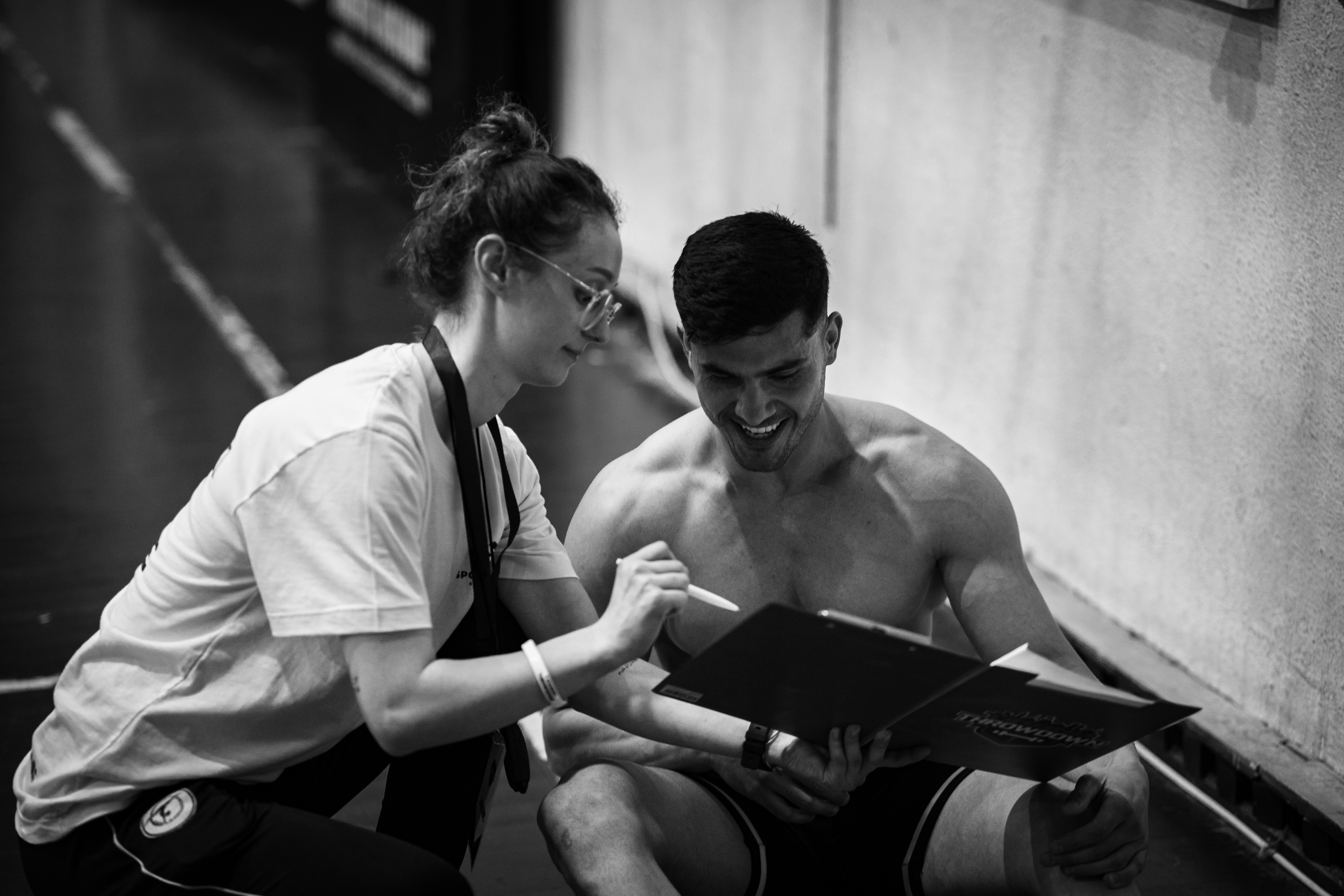
A newfound fascination lies in how AI can discern an athlete’s physical condition and training loads to forecast injury risks. This predictive capability is a boon for proactive injury prevention, saving athletes from the agony of physical setbacks. Additionally, AI-driven robots and wearable devices now offer invaluable support during the recovery process, guiding athletes through rehabilitation exercises and providing real-time feedback (Cheng et al., 2023). These innovations continue to redefine the rehabilitation landscape, potentially offering swifter recoveries and enhanced post-injury performance. In addition to its applications in high-level sports, AI offers a game-changing opportunity for amateur athletes. AI empowers individuals by providing technical demonstrations and real-time performance feedback without the necessity of a dedicated coach (Wang et al., 2019). While this technology may not replace the role of coaches at the elite level, it has the potential to revolutionize amateur sports. Imagine having access to high-quality feedback and guidance anytime, anywhere. This accessibility could supercharge the quality of amateur sports, enabling aspiring athletes to refine their skills, correct mistakes, and hone their techniques with unparalleled convenience. It’s a democratization of coaching that has the potential to uplift athletes of all levels, bridging the gap between aspiration and excellence.
In conclusion, the convergence of sports and AI is nothing short of a revolution. From elite athletes competing on the grandest stages to grassroots practitioners honing their skills, AI’s transformative power has the potential to impact them all. It has the potential to reshape the landscape by customizing training programs, automating performance analysis, predicting injury risks, and aiding in rehabilitation. This technology is redefining the way athletes train, compete, and recover, setting new standards for excellence in sports. AI’s democratization of coaching not only benefits the elite but also empowers amateur athletes to bridge the gap between aspiration and excellence.
To learn more about Cavan’s research please check out this SHU blog article about his project, and give him a follow on LinkedIn.
References:
Bodemer, O. (2023). Enhancing Individual Sports Training through Artificial Intelligence: A Comprehensive Review. TechRxiv. https://doi.org/10.36227/techrxiv.24005916.v1
Cheng, K., Guo, Q., He, Y., Lu, Y., Xie, R., Li, C., & Wu, H. (2023). Artificial Intelligence in Sports Medicine: Could GPT-4 Make Human Doctors Obsolete? Annals of Biomedical Engineering, 51(8), 1658–1662. https://doi.org/10.1007/s10439-023-03213-1
Wang, J., Qiu, K., Peng, H., Fu, J., & Zhu, J. (2019). AI Coach: Deep Human Pose Estimation and Analysis for Personalized Athletic Training Assistance. Proceedings of the 27th ACM International Conference on Multimedia, 374–382. https://doi.org/10.1145/3343031.3350910
Wang, L., & Sharma, A. (2022). Analysis of sports video using image recognition of sportsmen. International Journal of System Assurance Engineering and Management, 13(1), 557–563. https://doi.org/10.1007/s13198-021-01539-4
 Engineering Sport