
Human factors, otherwise referred to as ergonomics, is a design approach exploring how we as humans interact with the systems, products, and environments around us to enhance performance, safety and comfort. The application of human factors ensures that systems, products and services are designed to make them easier, safer and more effective for people to use. We see examples of human factors and human-centred design embedded within all aspects of our lives, from the fit of the clothes we wear, the layout of supermarket checkouts, to the design of the seat and controls in a fighter jet. Human factors specialists need to upon knowledge from a variety of disciplines, such as anatomy, physiology, design and psychology, and bring it all together in something called a ‘systems approach’.
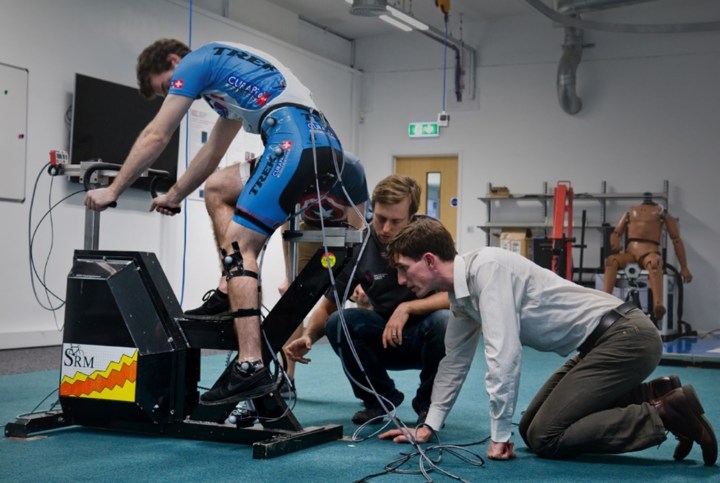
Human factors within Sports Engineering are also vitally important, but here we are mainly concerned with how we can improve the synergy between an athlete and their equipment or environment to optimise their performance, training and skill development. Whether it is conducting biomechanical analyses of different athletic movements to inform equipment design and training techniques; assessing usability, comfort, and performance of equipment through athlete feedback; or enhancing equipment design and training protocols to reduce the risk of injuries. In other words, the human is at the heart of everything you do within the field of sports engineering.
It is for this reason, that human factors is one of the core taught modules on our newly redeveloped MSc Sports Engineering course.
Module overview
The module leader for Human Factors in Sports Engineering is Dr Mike Thelwell, a Research Fellow in advanced human body measurement and 3D surface-imaging within the Research Group at Sheffield Hallam University.
The aim of the human factors module is to help students develop the knowledge and skills required to design, deliver, and disseminate human-centred research projects within a sports engineering industry context. Examples of the types of topics that will be covered within this module include:
- The research process – the scientific method, establishing a research question and searching the literature.
- Data analysis techniques – integrating statistical and data analysis techniques within both quantitative and qualitative approaches.
- Ethical considerations – how to ensure research integrity, health and safety, obtaining ethical approval and secure data management.
- Human-centred research case studies in human movement analysis, morphology, and behaviour change, motor control and learning
In addition to enabling them to complete the challenges within this module, the content and skills that the students will learn will also prepare them to submit their proposal for their year-long industry linked research project, as well as any future research project. This should provide students with an appreciation of how to choose an appropriate study design and an awareness of any ethical considerations of conducting research with human participants.
Industry-linked assessment
Along with the other modules on the redeveloped MSc Sports Engineering course programme, real world client challenges will be central to the assessments that students will need to complete within human factors. In previous years, both SERG staff and our students have conducted a wide range of human-centred research projects, including:
- The effect of football type on heading impacts – FIFA
- Measuring running dynamics using a Runscribe sensor – On Running
- Developing a new international standard for snowboarding wrist protectors – International Standards Organisation (ISO)

Click here for full details on this module and the MSc Sports Engineering course. We recommend all prospective students get in contact with us directly first, ahead of applying. To discuss the programme in more depth or arrange a visit contact Dr John Hart or Dr Mike Thelwell.
 Engineering Sport